Japan Earthquake and Tsunami: 80cm Sea Level Rise Recorded at Kuji Port
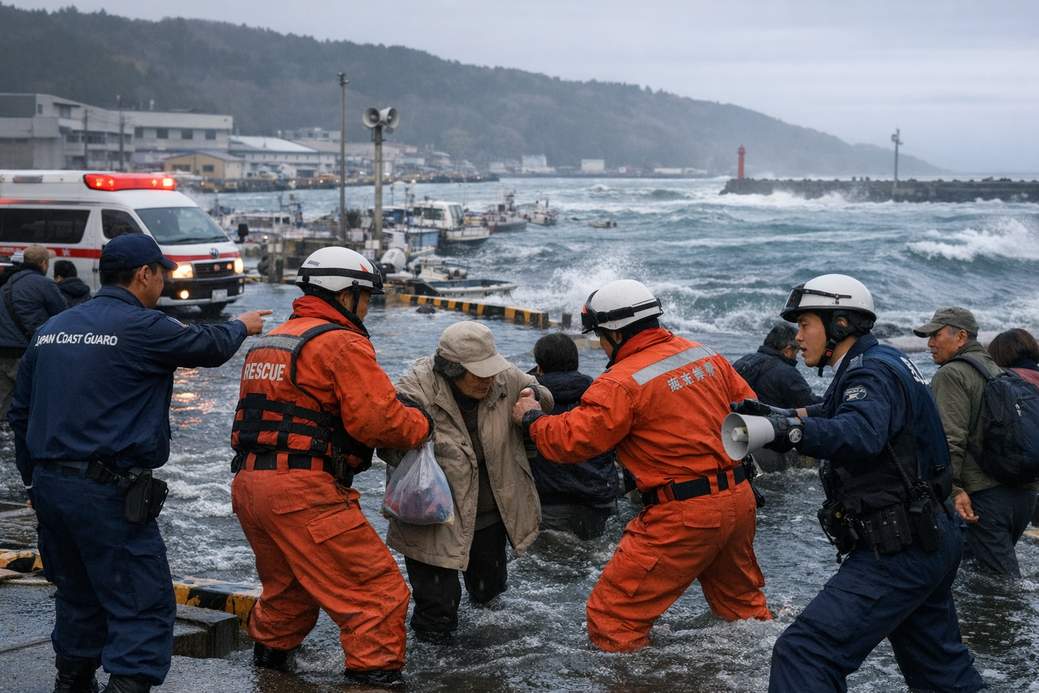
The shake, the surge, and the little port that got a big splash
A strong 7.4-magnitude quake hit off the northern coast of Iwate in the late afternoon local time, sending tremors far enough to rattle high-rises in Tokyo. Within about 40 minutes a seawater bump of roughly 80 centimeters rolled into the port of Kuji. Officials quickly raised tsunami alerts for large stretches of the northern shoreline, with some areas warned to expect waves as high as three meters.
The scene was tense but not instantly catastrophic: some ports showed no obvious, immediate damage in the first minutes after the shaking, yet coastal communities were told to treat every incoming wave as potentially dangerous.
Evacuations, repeat waves, and the government on alert
Authorities ordered people living near coasts and rivers to get to higher ground or to designated shelters and warned that the danger might not be over after the first wave. Repeated surges are common after undersea quakes, so residents were urged to stay put in safe zones until officials lifted the alerts.
The government moved quickly to coordinate a response, convening emergency teams and urging the public to evacuate when warnings were in place. Early reports did not show widespread casualties or major structural collapse, but monitoring and checks were ongoing as emergency crews assessed ports, shorelines, and other vulnerable areas.
Why this still matters — the seismic background
Japan sits on multiple tectonic plate boundaries, so quakes and tsunamis are an unwelcome regular on the calendar. Big temblors vary in impact depending on depth, location, and how close they are to population centers. The memory of the massive 2011 quake and tsunami — which caused widespread loss of life and triggered a nuclear crisis — keeps authorities and communities on high alert whenever a large offshore event happens.
Long-term risks remain in other zones too, and planners warn that future mega-quakes and accompanying tsunamis could cause enormous damage if they strike in the wrong place at the wrong time. For now, the focus is on helping evacuees, checking for injuries or damage, and keeping people away from the coast until the all-clear is given.