Nancy Guerrero on MSF’s Fight Against Violence in Latin America: Leading with Local Insight
From Ocaña to leading MSF in South America
Nancy Guerrero started out as a business administrator in Ocaña and answered a newspaper ad in 2004 that set her on a 22-year detour into field clinics, emergency tents and international coordination rooms. After missions across Latin America, Africa and South Asia, and a stint running MSF’s institutional office in Colombia in 2023, she took the helm of MSF’s Spanish-speaking South American section in 2024, based in Buenos Aires with teams in Bogotá and Montevideo.
The operation she oversees is big: MSF works in over 75 countries with hundreds of active projects and relies overwhelmingly on private funding. Guerrero’s path is part practical logistics and part deep familiarity with conflict-affected communities — the kind of on-the-ground experience that shapes how aid gets delivered when the map looks more chaotic than comforting.
Crises, access and the daily reality of violence
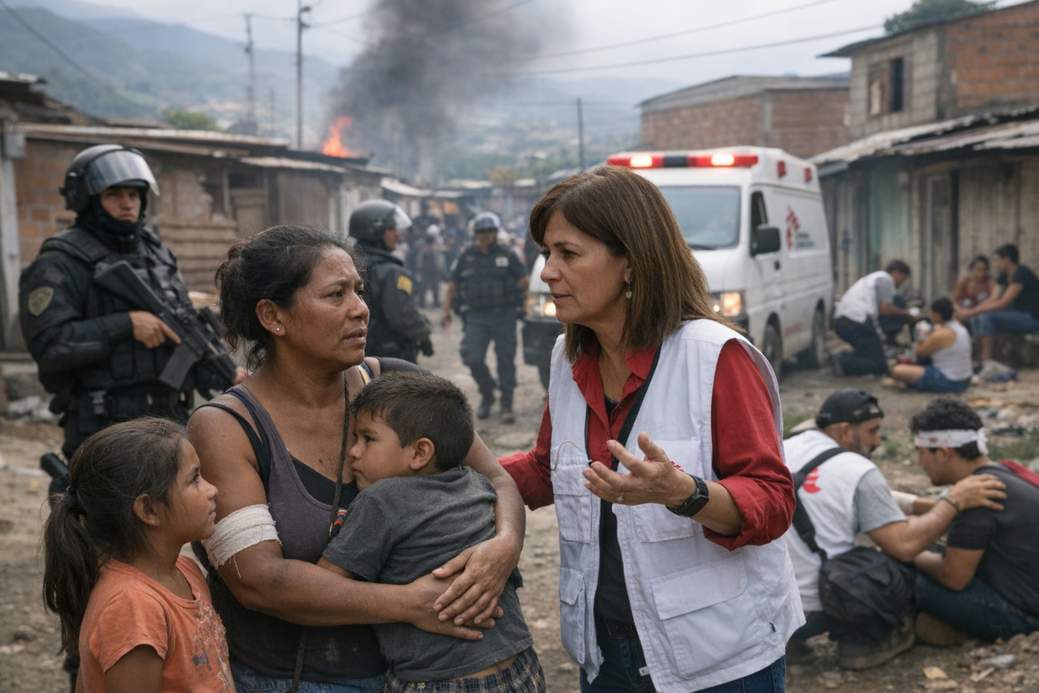
Despite international rules meant to protect medical care, attacks on health services keep rising. MSF’s tracking of hundreds of incidents over the last decade has shown troubling spikes in recent years, and the result is predictable and brutal: ambulances and clinics that should be safe become targets, forcing teams to pause services when staff safety can’t be guaranteed.
Haiti is a stark example. Widespread armed violence, collapsing institutions and gang control mean care often arrives only intermittently. MSF teams have been forced to close centers after attacks; wounded patients have been killed while being transported; mobile clinics try to reach people in areas controlled by armed groups; and thousands of survivors of sexual violence have needed treatment. Camps for displaced families face overcrowding, outbreaks of skin disease and children with respiratory infections — a humanitarian picture made worse by storms and earthquakes on top of chronic insecurity.
Migration routes have also shifted. The flow through the Darién dropped dramatically from the huge numbers seen earlier in the decade, but that hasn’t made migration safer. People are scattered along new routes or stranded in border towns, facing extortion, torture and sexual violence. Mental health needs are growing, and many require medication and long-term support. At the same time, a quieter reverse movement has appeared: people trying to go south to rebuild lives, only to run into restrictive national policies and a lack of services.
In Venezuela, MSF runs projects in remote and coastal states where teams provide general care, maternal and neonatal services, infection control and treatment for diseases like tuberculosis and HIV, while also preparing for emergency scenarios tied to regional tensions. And in conflict zones from Gaza to Sudan, aid workers report deliberate damage to water and medical supplies and large-scale shortages that turn basic survival into a daily emergency.
Priorities, neutrality and what leadership looks like now
Neutrality for humanitarian groups means offering care to civilians on all sides and speaking up with medical data and testimonies when access is deliberately blocked. That reporting is part of keeping humanitarian space visible, even as legal and operational restrictions make work harder in some places.
MSF must pick its battles. When funding cuts hit other organizations, gaps open and priorities shift toward urgent, life-saving tasks. That reality has forced teams to reprioritize activities in many regions. At the same time, returning to places like Catatumbo — where communities once again find themselves besieged by armed groups — shows how cycles of violence repeat and keep health needs simmering for generations.
Leadership that comes from the Global South matters in practical ways: it brings local knowledge, familiar mental health approaches and community-centered practices that can be exported elsewhere. Across Latin America, the long‑running epidemic of violence continues to shape what humanitarian work looks like — and the focus remains on keeping those problems visible, protecting access to care and making sure assistance reaches people whose daily lives are anything but normal.