Why Bad Bunny’s Super Bowl Halftime Show Sparked Buzz and Debate
Hype, hoaxes, and showbiz gymnastics
The weeks before the halftime show were basically a reality-TV audition for the internet’s outrage machine. One minute Bad Bunny was playfully telling people to “learn Spanish” on SNL, the next there were wild rumors about wardrobe stunts and surprise tributes. Some turned out to be hot gossip, some were clearly planted publicity, and a few were just people loving the drama. Bottom line: the lead‑up kept eyeballs glued to the story no matter what.
Whether you call it genius marketing or attention-seeking chaos, the pregame circus ensured nobody would forget who was on stage — even if they weren’t sure what he was serving.
A Puerto Rican postcard on turf
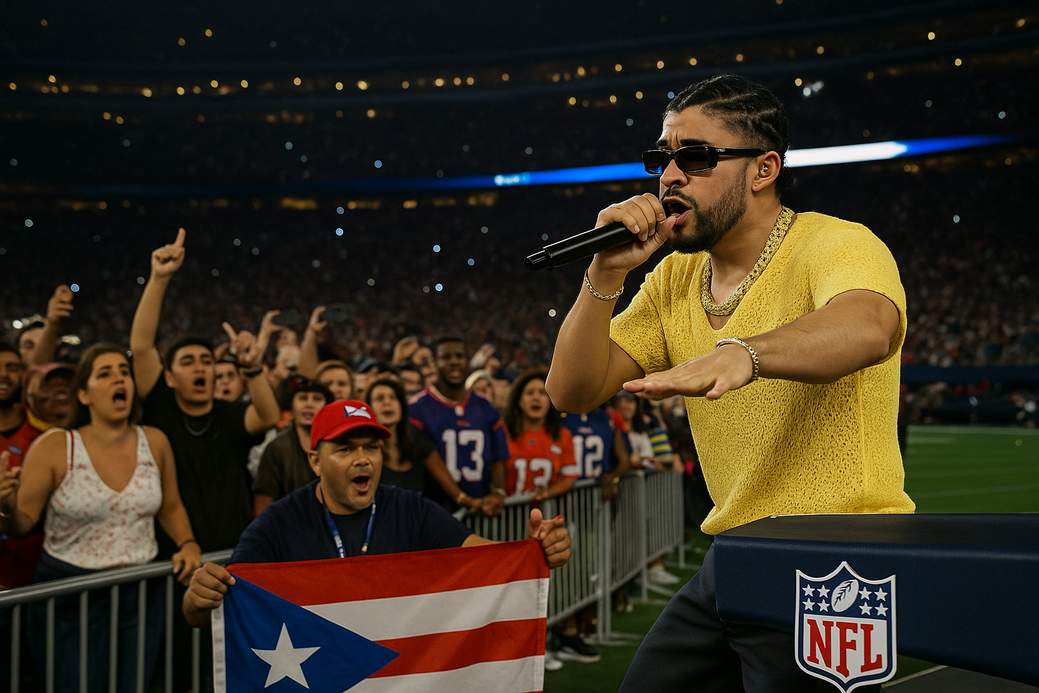
The show itself felt like a sprint through a Puerto Rican travel brochure: sugar‑cane vibes, a coconut‑stand energy, a domino table, and a mashup of hits that hit like familiar snacks passed around at a family party. There was even a salsa cameo that had folks everywhere humming along for a hot second.
But it wasn’t just a cultural sampler. The set threw in symbolic moments — a blackout scene, a flashing Grammy quote about love over hate, and a finale that waved a flag while the artist shouted a blessing that some viewers heard as a shoutout to the whole Americas rather than one nation. Add a lyric about “what happened to Hawaii” and you get a lot of people squinting and asking, “Uh… what message are we getting here?”
To many fans it was a vibrant, authentic flex of identity and roots. To other viewers, a few of the choices read as political theatre — intentional or not — and that’s what turned the applause into debate.
Global gambit or PR fumble?
From a business angle, the NFL picking a Latin superstar makes sense: global growth, new markets, and a huge Latin fanbase to court. Still, when the halftime stage becomes a place for identity to headline rather than bridge, people bristle — especially at an event billed as for everyone.
So was it a brilliant, culture-forward statement or a tone‑deaf mismatch for a family TV moment? Depends who you ask. Some saw representation and celebration; others saw a show that favored niche meaning over mass sing‑along moments. Either way, the halftime drama reminds us that in 2026 even a three‑minute beat drop can double as a politics lesson.