Israel’s Large-Scale Attack in Tehran Targets Iranian Missile Systems and Key Infrastructure
What happened in Tehran
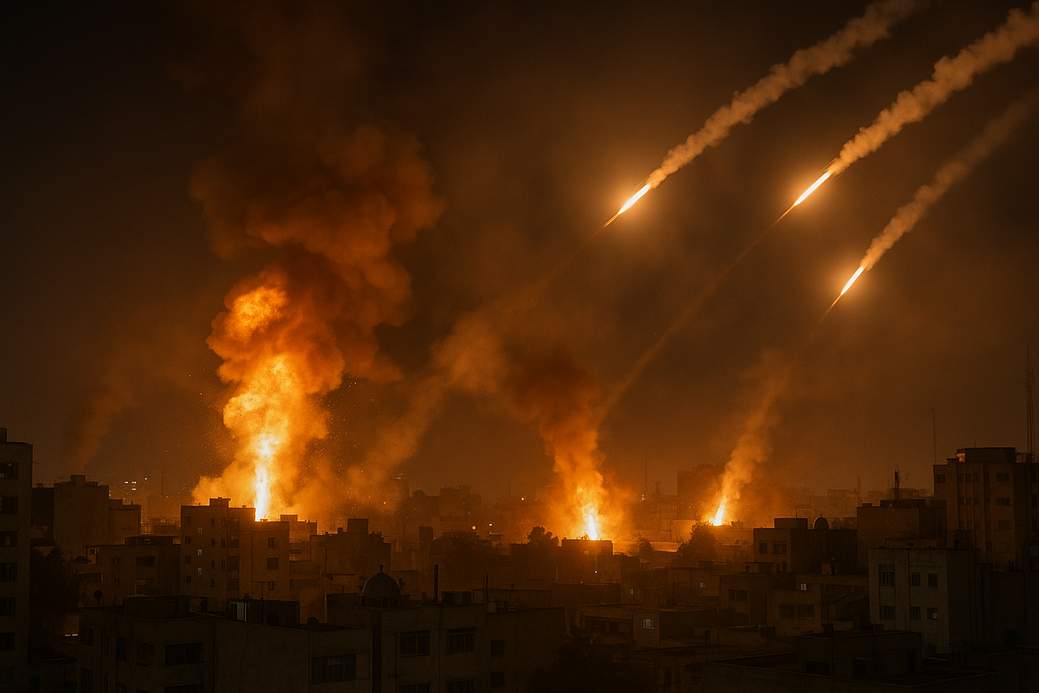
A large-scale Israeli air operation struck multiple locations in Tehran, hitting command centers, ballistic missile sites and critical infrastructure tied to the regime’s security apparatus. Among the reported hits were a security headquarters linked to the Revolutionary Guard, a maintenance facility used by internal security forces, and sites associated with the ballistic missile network.
The strikes reportedly also targeted air-defense positions, aiming to limit the city’s capacity to intercept aircraft and to open up airspace control.
Goals and military logic
The offensive appears designed to degrade both the weapons themselves and the behind-the-scenes systems that keep them operational — logistics hubs, maintenance centers and command nodes. Think of it like unplugging the chargers and hiding the spare batteries: the missiles might still exist, but their reach and readiness drop fast.
Removing or damaging air defenses was framed as a way to expand aerial freedom over Iranian skies, while strikes on command-and-control and supply lines aim to disrupt coordination and long-range strike capabilities.
Aftermath and what comes next
Officials announced the operation as a deepening phase meant to weaken the regime’s core military systems and signaled that offensive activity would continue until objectives are achieved. There have been reports of key casualties and mentions of senior figures being on target lists as the campaign moves forward.
Military statements stressed a determination to pursue threats beyond borders and indicated further actions could follow as part of an ongoing effort to neutralize long-range dangers and erode crucial elements of the adversary’s military structure.