Israel’s Nighttime Strike in Tehran: Killing of Ali Larijani and Basij Commander
Nighttime strike in Tehran
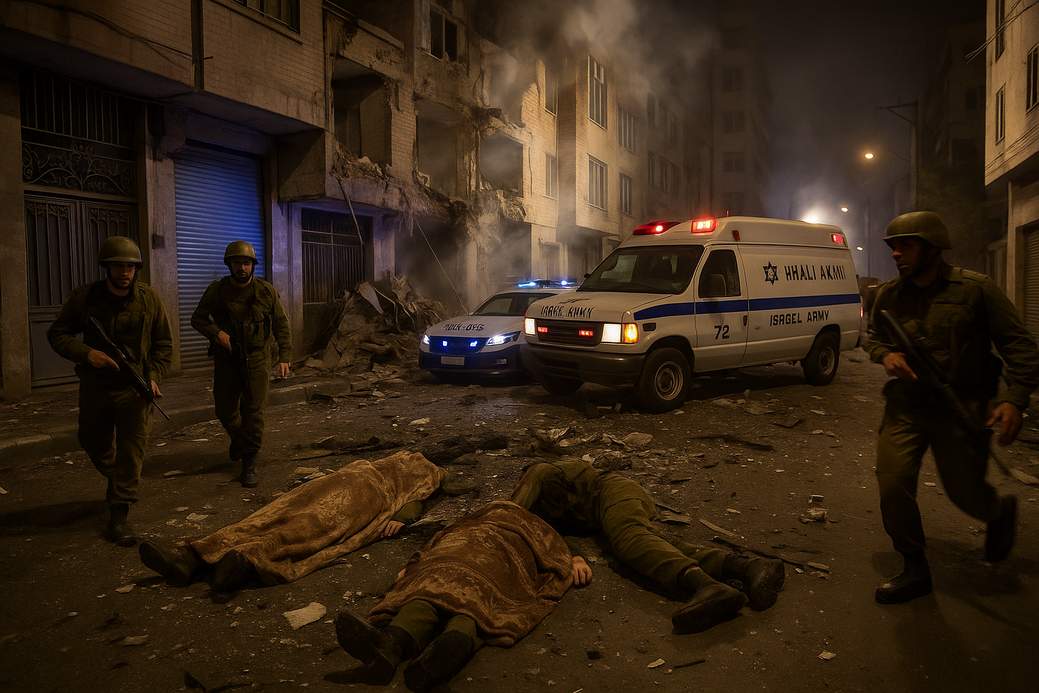
Israel announced it carried out an airstrike in Tehran overnight that targeted Ali Larijani, secretary of Iran’s Supreme National Security Council, and killed him along with the commander of the Basij paramilitary force. Officials described the operation as precise and based on military intelligence, and said the strikes hit locations inside the capital followed by public confirmation of the deaths.
The defense minister used blunt, combative language after the operation, calling it part of a wider campaign against Iran’s security leadership. Military statements framed the action as the removal of senior figures tied to the regime’s security apparatus.
Larijani’s profile: from parliament to philosophy
Larijani was a long-time insider in the Islamic Republic: a former Revolutionary Guards officer, a multi-term speaker of parliament, a one-time culture minister and a persistent presidential hopeful. He also ran state broadcasting for years and played a major role shaping official messaging while building an academic résumé — with degrees in mathematics and computer science and a doctorate in philosophy that delved into Kant and mathematical philosophy.
After the death of the country’s supreme leader, Larijani’s influence on security and foreign policy reportedly increased, placing him at the center of decisions tied to domestic unrest and regional moves. He had been linked to the hardline response to protests and remained an active, sometimes provocative, presence online in the days before the strike.
Potential fallout and context
Removing two senior commanders is being presented by military spokespeople as a significant blow to Iran’s security command and control. Officials said the deaths add to a list of targeted eliminations of senior personnel and could disrupt the regime’s operational coordination.
The immediate future is unclear: the strike could escalate tensions, invite retaliation, or trigger internal shifts as new figures step into vacated roles. International observers are watching for any quick countermoves and for signs of how Tehran will reorganize its security leadership in the wake of the attack.