Ultraprocessed Foods and Increased Death Risk in Cancer Survivors: What You Need to Know
Study shows processed eats may affect survival
Alright, spoiler alert: a new study suggests that cancer survivors who chow down on lots of ultraprocessed foods might be flirting with a higher risk of dying — from any cause and from cancer specifically. Researchers followed more than 24,000 people between 2005 and 2022, and 802 of those were cancer survivors who filled out diet questionnaires. All participants were 35 or older and lived in the Molise region of southern Italy, and the median follow-up time was about 14.6 years.
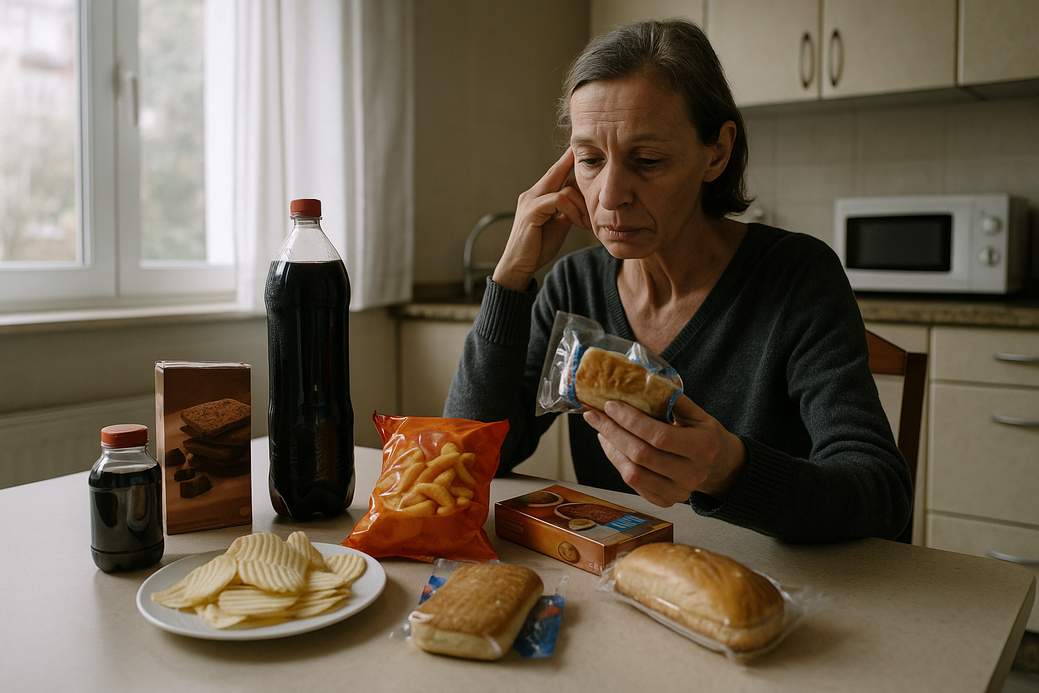
The scientists used the NOVA system to tag ultraprocessed foods (UPFs) — think ready-to-eat items packed with additives, funky ingredients lists and industrial trickery. Categories included things like processed meats, salty snacks, sugary treats and dairy products with added extras. When survivors fell into the highest third of UPF intake by weight, their risk of death from any cause was about 48% higher, and cancer-specific death was about 57% higher, compared with those in the lowest third.
Why these foods might be trouble — and a weird little number
It’s not just calories or carbs on paper. Ultraprocessed foods often bring along preservatives, artificial flavors, emulsifiers and other industrial doohickeys that can meddle with metabolism, upset gut bacteria and stoke inflammation. The researchers estimated that increased inflammation and higher resting heart rate explained roughly 37% of the link between UPFs and mortality — so there’s some biology backing the headline-grabbing numbers.
The association persisted even after accounting for whether people followed a Mediterranean-style diet, which suggests the problem isn’t only about classical nutrient counts but also about how food is made. Still, the study can’t prove cause and effect — it relied on people reporting their own diets (people are famously rubbish at that) and measured diets many years after cancer diagnosis, so there’s a chance the sample skews toward folks who survived long enough to be included. Also, since the group was Italian, the results might not map perfectly to other countries.
Practical, slightly judgment-free advice
If you’re a survivor (or just someone who likes food that tastes like actual food), a few sensible moves could help: favor fresh, minimally processed, home-cooked meals, and give suspicious ingredient lists a side-eye. Experts say foods listing more than five ingredients or containing industrial additives are often ultraprocessed, so label-checking is your friend.
Remember the caveats: observational study, self-reported diets, and a specific geographic group — so don’t panic-buy kale just yet. But if you want to tilt the odds in your favor, swapping a handful of packaged goodies for whole foods and home-cooked bites is a low-drama, high-reward place to start.