Heartbreaking Farewell from Afar: An Iranian Woman’s Story of Exile and Loss in Argentina
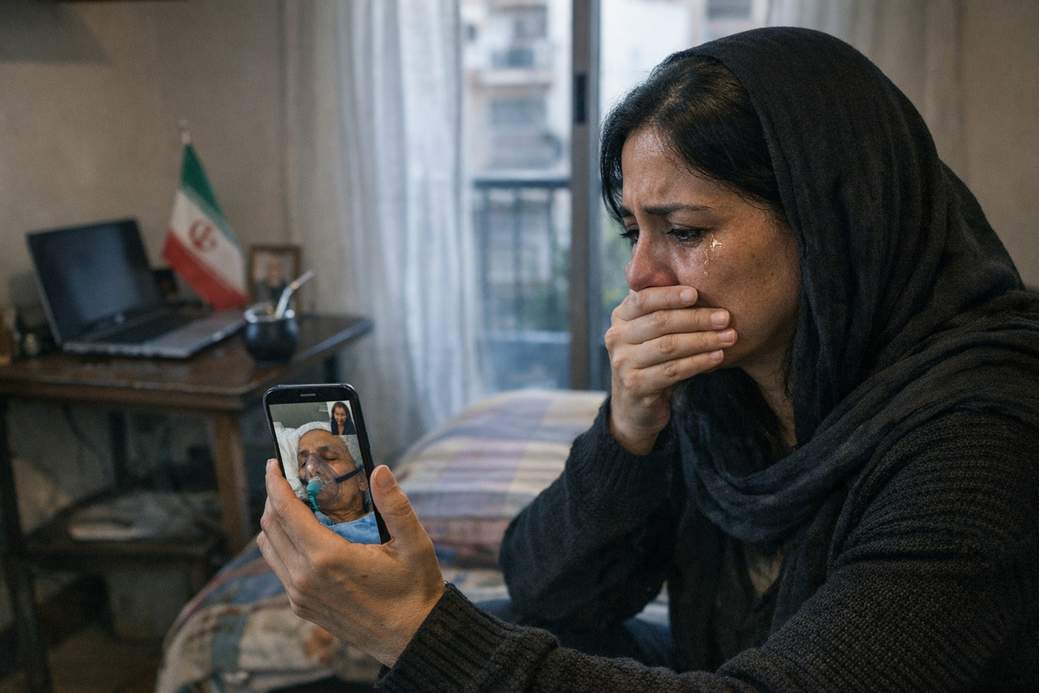
A goodbye through a tiny rectangle
Samira left Iran decades ago and made a life in Argentina, but distance wasn’t the only thing between her and her family. Contact was sputtery and precious: short calls to confirm people were alive, tiny windows of connection that felt like trying to hug through a keyhole. The last time she saw her mother, it was via a phone screen while the burial was already happening. She begged them to bring the phone to the grave so she could at least watch the farewell. That moment — a final goodbye seen on a tiny rectangle — stayed with her like a bruise.
The emotional toll is quietly brutal. Exile stacked on top of limited communication turned routine grief into a surreal, paused replay: news that someone had died, a flurry of black clothing, a phone held up to a coffin. There was no proper goodbye, only a technology-mediated instant that felt equal parts blessing and cruelty.
Living under rules, cameras and sudden silence
The backdrop to Samira’s story is a society under tight control: public gatherings are policed, internet access can be cut at will, and surveillance is everywhere. Protest crowds that once felt unstoppable were met with heavy-handed repression, with authorities using overt and covert tactics to contain dissent. Roads and vehicles are repurposed, cameras watch corners, and sometimes official vehicles arrive disguised as something else. The result: a constant sense that the ground can shift under your feet at any moment.
Daily life comes with odd, strict rules that shape everything from how people dress in public to whose rights are prioritized. Women face systemic disadvantages — in custody battles, marriage, and basic freedoms — and attempts to gain small liberties, like riding a motorcycle, are often blocked with claims of propriety. Religious and social codes are enforced down to strange personal details, and the climate of fear makes speaking out risky in ways that change how people move through each day.
Exile, memories and a stubborn hope
Samira’s life in Argentina is a tangle of memories: she once worked as a ski instructor, followed family traditions of winter sports, and married a man she met while abroad. Those shards of an ordinary life sit beside the heavy stuff — the pain of seeing loved ones only through screens and the ache of not being able to attend a funeral. Exile softens some things and sharpens others: it protects but isolates, offers safety but creates a persistent sense of loss.
Still, there’s a thread of hope. After decades under an oppressive system, the wish for change remains alive. Samira carries that mixture of bitterness and stubborn optimism — the kind that keeps people talking about better days, even when the present is full of shadows. Her story is one voice among many, a reminder of how control and distance leave scars that take a long time to fade.