Inside Bayt: The Hidden Network Controlling Iran’s Fate
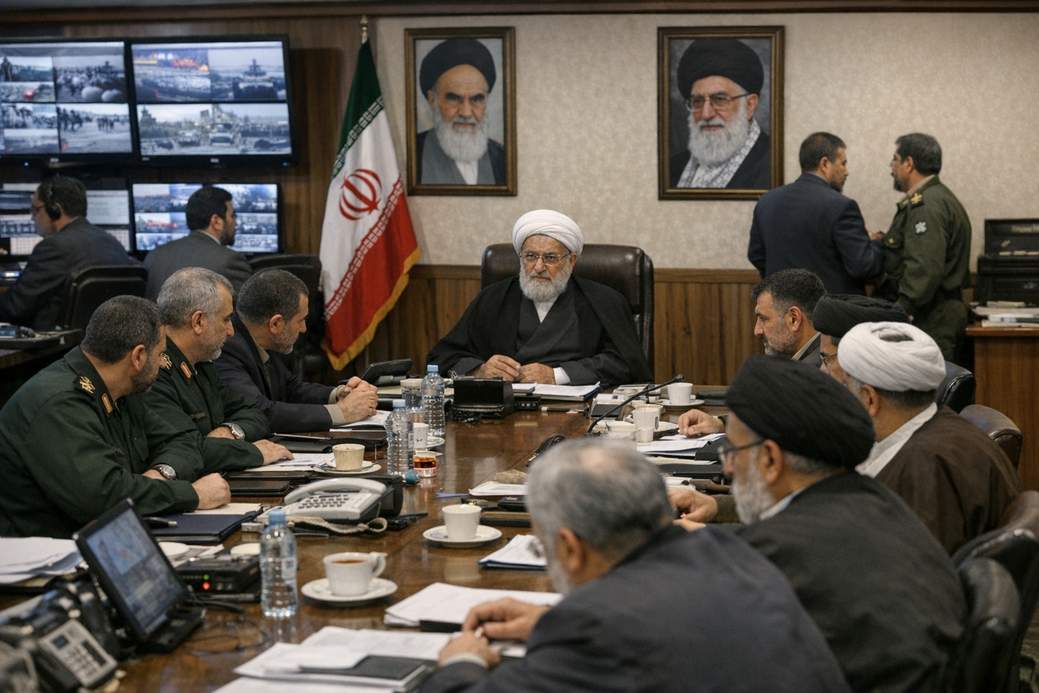
The shadow headquarters
Think of Bayt-e-Rahbari not as a single bunker but as a sprawling backstage control room — part palace, part command center, part paranoid family office. Even after the compound was hit and the longtime Supreme Leader died in 2026, the machine didn’t simply vanish. A successor was installed and the network kept humming; the physical walls might crumble, but the wiring stays.
At its core the Bayt grew into a massive operation: a few thousand people in the central offices and tens of thousands of representatives sprinkled through ministries, universities and other institutions. That’s not a simple advisory staff; it’s a parallel staff with authority to watch, block, or steer decisions across the state. In short: it’s the institutional echo of the Leader’s will, everywhere at once.
How it pulls the strings
The Bayt is wired into daily life in ways that look like bureaucratic plumbing. Every ministry effectively has a counterpart cell attached to the Bayt; universities have representatives who keep tabs on faculty and students; the security wings influence promotions and deployments in the armed forces. Elections, appointments and street-level crackdowns have all been shaped by this network’s hands — sometimes visibly, sometimes through shadowy intermediaries.
One figure who repeatedly surfaced as a central node inside that web was the Leader’s son, who functioned for years as an informal power broker inside the Bayt. He ran an inner circle that operated like an unofficial intelligence and enforcement arm, moving between politics, security and the family’s interests. That mixture of family ties plus security muscle helped the Bayt stay effective at micro-managing crises and outcomes.
Money, muscle and the three-layered state
Where the Bayt really flexes is with cash and control. A constellation of state-aligned foundations and conglomerates funnels huge economic resources directly under the Leader’s orbit — real estate portfolios, companies across transportation, hospitality, banking and energy. Some of these holdings have been estimated in the tens of billions, giving the Bayt an offline economy that rivals formal government channels.
To make sense of all this, picture three overlapping layers: the visible elected state with presidents, parliaments and courts; a clerical state centered on the lifetime Supreme Leader and his security enforcers; and a pervasive Bayt that threads through both, making sure major decisions—from oil deals to who gets promoted—fit the Leader’s playbook. Even when top people change, that institutional skeleton keeps the same posture: succession is managed, authority is reproduced, and the network keeps doing its thing.